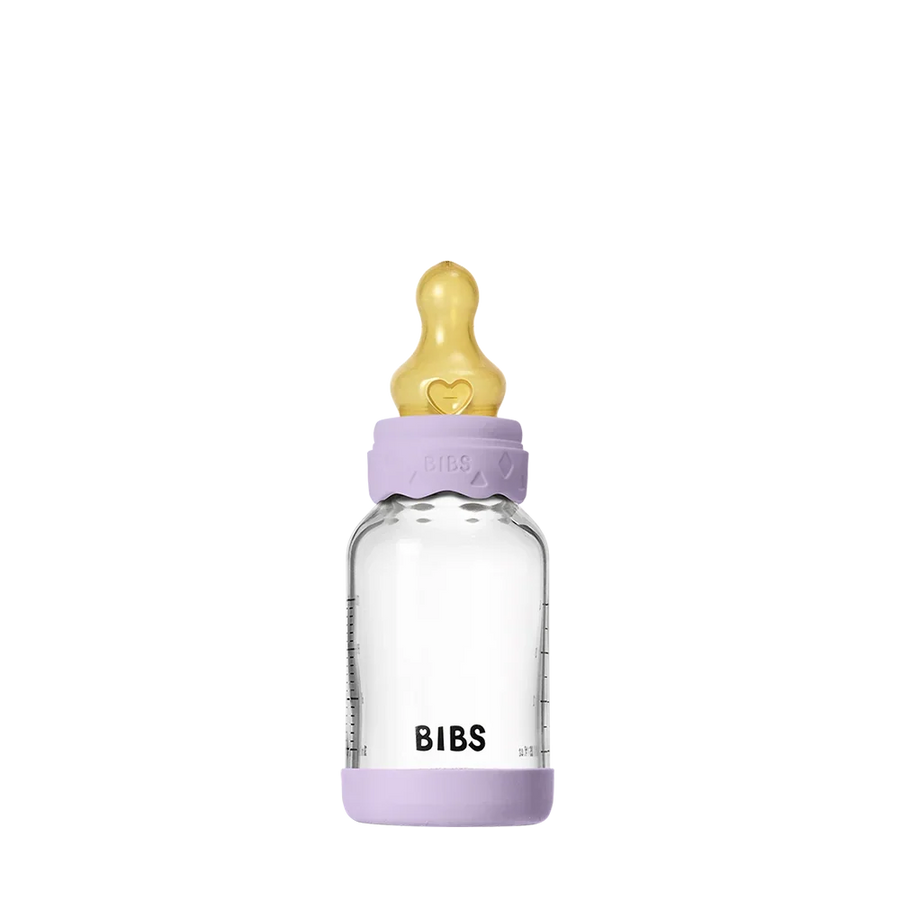
Proper cleaning and sterilizing of your baby’s bottles and its components are essential to help prevent the build-up of germs and bacteria, and establishing a consistent baby bottle cleaning routine is key. The first thing to know about preparing a safe baby bottle is that it involves a two-step process: cleaning and then sterilizing. Cleaning baby bottles safely removes milk residue and any leftover buildup, while sterilizing thoroughly eliminates bacteria and other harmful microorganisms. There are several ways to sterilize baby bottles at home, so it’s important to choose the method that best fits your family’s routine and preferences.
❗ Note: This guide covers cleaning and sterilizing the bottle body and its components. For instructions on cleaning bottle nipples, please read here.
Step 1: Cleaning
Establishing proper baby bottle hygiene begins with cleaning. Disassemble the bottle and its components (e.g., milk lock, screw cap, etc.) and wash everything with gentle soap and warm water. Rinse thoroughly to avoid any soap residue. Alternatively, run items through the dishwasher (top-rack only)—but note that the funnel is not dishwasher safe and must be washed by hand.
Step 2: Sterilizing
Boiling Method
A simple, one-time process recommended before first use to remove any potential manufacturing residue and ensure bottles are completely safe for your baby.
- Boil: Submerge all bottle parts in a pot of boiling water for 5 minutes.
- Dry: Carefully remove the items and place them on a clean towel to air dry. Ensure all parts are cool and dry before reassembling.
❗ Note: This method is intended before first-time use only and should not be used for regular sterilization, as repeated exposure to high heat may affect the durability of certain components. One of the following three methods should be used moving forward.
Scalding Method
An easy way to sterilize baby bottles and components at home, using items you already have. By fully submerging the items in a clean bowl and pouring boiling water over them, this method is both practical and safe, ideal for routine sterilization when specific equipment isn’t available.
- Prepare: Place the bottle and all components in a clean bowl.
- Add boiling water: Pour enough boiling water to fully submerge all individual parts. Ensure all surfaces are covered.
- Soak: Let the items soak for approximately 5 minutes.
- Dry: Carefully remove all items and place them on a clean towel to air dry. Allow everything to cool and dry completely before reassembling.